
Lean Vs Skinny: The Truth About Looking Fit Vs Just Thin

We hope you enjoy reading and hopefully learn something! If you would like to schedule a free consultation call with one of our coaches, click here.
Author: Jerry P. | Co Founder of Positive Realist
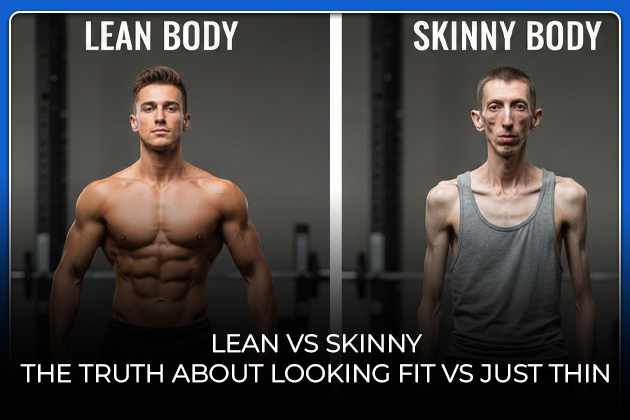
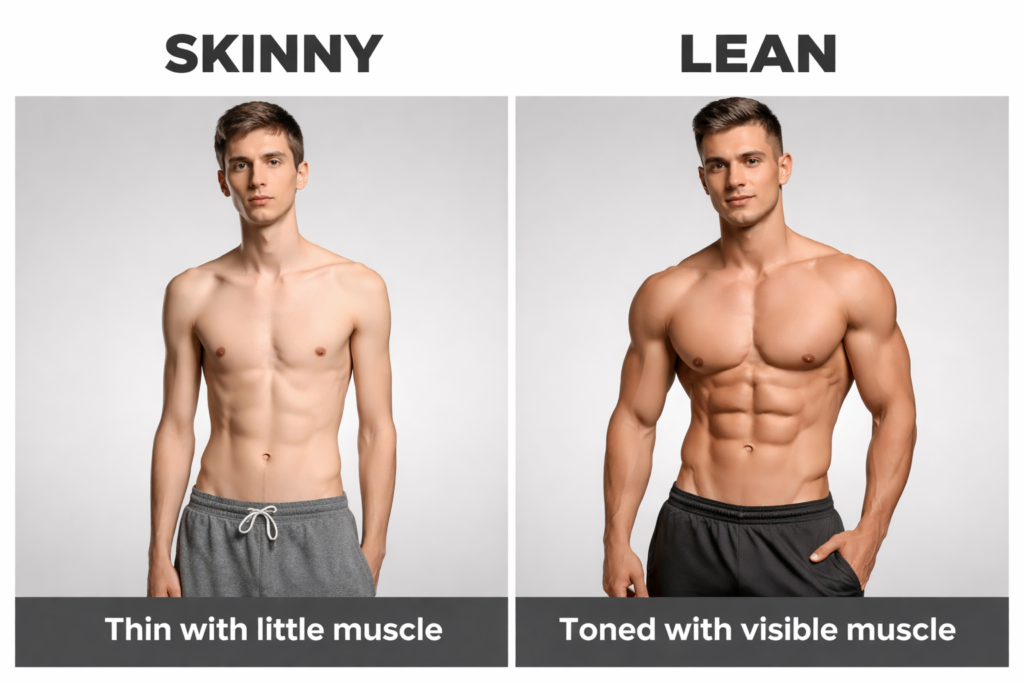
Lean and skinny are often confused, but they describe very different body types. Skinny refers mainly to low body weight and usually comes with little muscle mass, which can make the body look thin and weak.
Lean, on the other hand, means having low body fat while maintaining visible muscle tone and strength. A lean body looks fit and defined because it reflects good nutrition, regular training, and balanced fitness. In simple terms, skinny is just being thin, while lean is being healthy, strong, and well-conditioned.
The only difference between lean and skinny is the “muscle.” A lean person has muscle, tone, and strength, and a skinny person often lacks muscle mass and strength.
Ready for Clarity in Your Next Chapter?
Real growth happens when you’re supported. If you’re ready to build clarity, confidence, and steadiness in your life or career, I’m here to help. Let’s take the next step together.
From Skinny to Lean
Positive Realists online health and fitness coaching helps you build real strength, lose fat the right way, and achieve a healthy lean body. Book your session and start training smarter today.
What Does “Skinny” Really Mean?
When someone is called skinny, it usually means they have a lower body weight than their height. But being skinny doesn’t always mean being healthy.
A person can be skinny because:
- Eating too little to support healthy weight gain
- Having a naturally fast metabolism
- Avoiding exercise or strength training
- Losing muscle mass over time
Being skinny can sometimes come with problems. For example, a 2018 study review found that underweight adults have a higher infection risk than normal-weight people.
Skinny bodies often lack definition. The arms and legs might look small, but not firm. There’s little visible muscle; sometimes, even with a flat stomach, the body can appear frail or undernourished.
What Does “Lean” Really Mean?
Being lean means having a low amount of body fat but a good amount of muscle. A lean person may not look “big,” but they look strong and defined. You can often see muscle tone in their arms, abs, or legs.
Leanness comes from balance. A mix of strength training, proper diet, and enough protein.
In short:
- Lean = low fat + visible muscle.
- Skinny = low weight + low muscle.
Why is the “Lean Vs Skinny” Difference Important to Understand?
Many people use these two words as if they mean the same thing. But they are not. How your body looks and feels depends not only on your weight, but on what that weight is made of: muscle, fat, or both.
1. Health and Strength
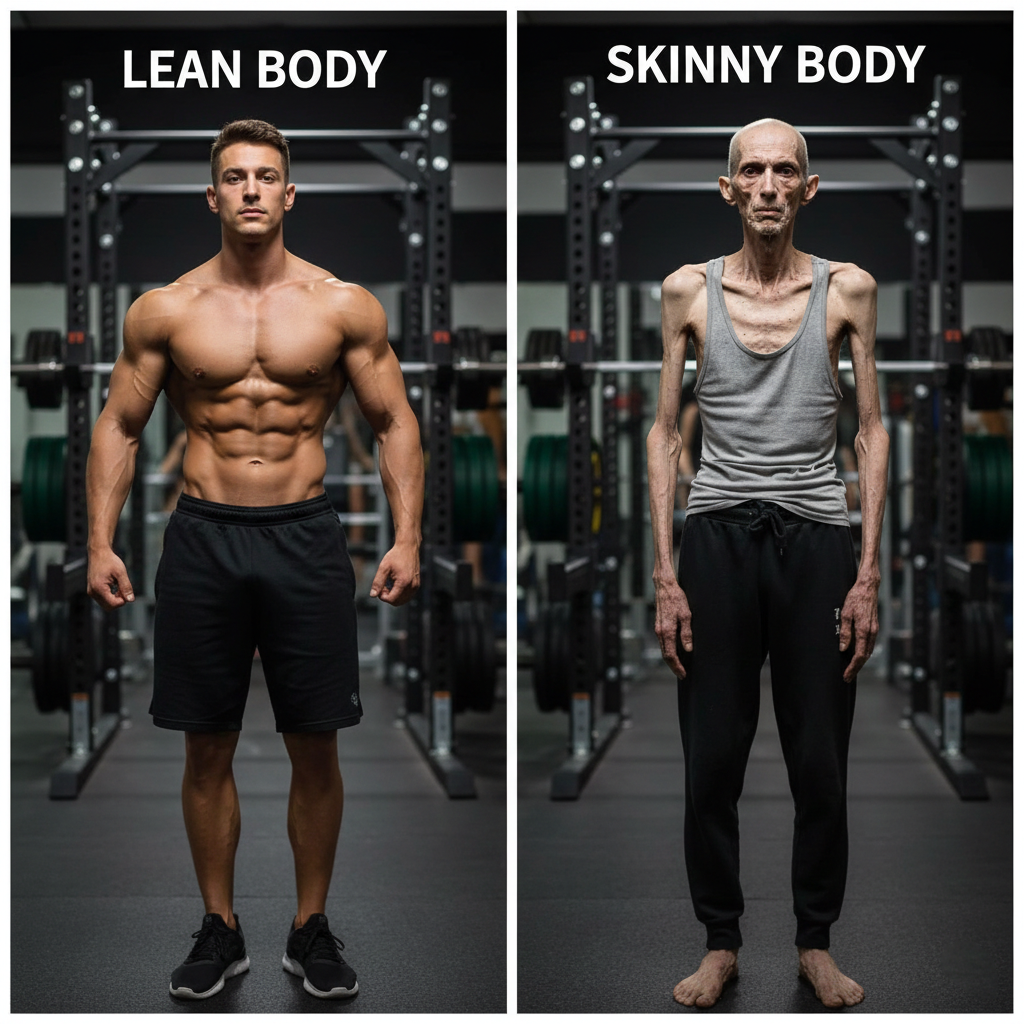
A lean body is strong and capable. You can lift, move, and stay active without getting tired easily. People who are lean often have good posture, solid bones, and steady energy through the day.
When someone is skinny, their body might not have enough fuel or muscle to support daily tasks. They may tire faster, feel light-headed, or find it hard to climb stairs or carry bags. This usually happens when the body doesn’t get enough nutrients or strength training.
2. Metabolism
Muscle helps your body burn calories, even when you’re sitting still. That’s why people with more muscle (lean bodies) often have faster metabolisms. They can eat a bit more and stay in shape because their bodies use energy more efficiently.
Skinny people, on the other hand, have less muscle. Their bodies burn fewer calories at rest, so when they eat more, it often turns into fat instead of muscle.
That’s why a skinny person might gain fat quickly if they suddenly increase their food intake without exercise.
3. Body Composition
You might weigh 150 pounds but still look fit and strong if your body fat and muscle mass are low. Being skinny, however, is only about weighing less.
Two people can weigh the same, but one can look toned and healthy (lean) while the other looks weak or undernourished (skinny).
5 Tips to Go from Skinny to Lean
If you are naturally thin but want a healthier, more toned body, the goal isn’t to “bulk up.” It’s to build muscle slowly while keeping body fat low.
Building a lean body takes time and patience. Results don’t show overnight. If you struggle with staying motivated or expect instant progress, learn how to manage your expectations the healthy way.
1. Strength Training
Lift weights or do bodyweight exercises like push-ups, squats, or pull-ups. Try to add this routine to your week for 3–4 days. Focus on progressive overload by adding small amounts of weight or reps over time.
2. Eat Enough Protein
Protein helps your muscles grow and recover. Aim for about 1.6 to 2.2 grams of protein per kilogram of body weight. Good sources: chicken, eggs, fish, beans, tofu, and yogurt.
A 2017 study found that doing strength or resistance exercises and eating enough protein helps your body build muscle. It also showed that people who eat a bit more protein (around 2.3 to 3.1 grams for every kilogram of body weight each day) can keep their muscle even when they are eating fewer calories to lose fat.
3. Get Enough Calories
If you are skinny, you might not be eating enough. Track your calories for a week. Then, eat 300-500 calories more per day than your current intake, mostly from whole, nutrient-rich foods.
4. Rest and Sleep
Muscles don’t grow in the gym; they grow while you rest. Get at least 7-8 hours of sleep daily and take rest days between hard workouts.
5. Stay Consistent
Transformation takes time. Most people notice changes after 2–3 months of steady training and eating.
The Psychology Behind It
The words “lean” and “skinny” also affect how people feel about their bodies.
- Being skinny is often linked to appearance: wanting to look small or thin.
- Being lean is about performance: wanting to feel strong and capable.
Many people see fitness in black and white. Either you are “skinny” or “fit,” “perfect” or “failing.” That kind of all-or-nothing mindset keeps you stuck. Our guide on binary thinking shows how to break that pattern and build balance instead.
This mindset shift is powerful. When you aim to be lean, you focus on health and ability, not just numbers on a scale.
How Can Being Too Skinny Affect Your Mental Health?
When your body doesn’t get enough nutrition, your mind struggles too. Many people feel pressure to stay thin because of what they see online or in society. They start believing that smaller always means better. But that thinking can cause:
- Stress and negative self-talk
- Comparing yourself to others all the time
- Feeling uncomfortable in your own skin
- Avoiding social events or hiding your body
When your body feels weak, your confidence drops too. But your mindset changes when you start building muscle, eating well, and focusing on strength. You feel more stable, more capable, and proud of your progress, not scared of food or the scale.
People Also Ask
Can a person be both lean and skinny?
It’s possible but not common. Someone can be naturally small and still have visible muscle tone, which is being both lean and skinny. But most skinny people don’t have much muscle, while lean people do.
Is being lean healthier than being skinny?
Yes. Being lean means having muscle, strength, and a better metabolism. Skinny bodies often lack muscle and nutrients, which can lead to fatigue, weakness, or health problems over time.
Can women build a lean body without getting bulky?
Definitely. Women don’t produce enough testosterone to get bulky. Strength training helps shape and tone the body, giving a firm, defined look, not a big or “heavy” one.
How long does it take to become lean?
Regular workouts and a proper diet can help. Most people start seeing noticeable changes in about 8–12 weeks. Staying patient and consistent makes the difference.


![Signs of Gaining Muscle in Female [Differences, Growth Insights]](https://www.positiverealist.com/wp-content/uploads/2024/03/Signs-of-Gaining-Muscle-in-Female-Differences-Growth-Insights.jpg)
