
10 Tips to Prepare for a Phone Interview (Before and During the Call)


We hope you enjoy reading and hopefully learn something! If you would like to schedule a free consultation call with one of our coaches, click here.
Author: Jerry P. | Co Founder of Positive Realist
Phone interviews are usually the first real step to getting hired, and the best way to succeed is simple: prepare what you will say, control your setup, and practice sounding calm and clear on the phone.
When you do that, you won’t freeze on “tell me about yourself,” you won’t rush your answers, and you will come across confident even without body language or eye contact.
At Positive Realist, we help job seekers in Las Vegas build confidence and improve communication so they can perform better in phone screenings and interviews. If you are waiting for your next interview, our phone interview preparation services can help you feel ready and confident.
Ready for Clarity in Your Next Chapter?
Real growth happens when you’re supported. If you’re ready to build clarity, confidence, and steadiness in your life or career, I’m here to help. Let’s take the next step together.
Why is Phone Interview Prep a Must?
Though phone interviews may seem easier because of no long commute, no in-person nerves, and no awkward waiting in the lobby, but once the phone rings, reality hits!
Your palms get sweaty, your mind travels through spaces while answering “tell me about yourself”, you overthink every pause, or talk too fast to fill in that awkward silence.
Introverts often struggle to sound confident and express themselves while talking to a stranger over the phone. On the other hand, an extrovert’s frustration peaks while communicating without any visual cues or body language.
Either way, a phone interview is more difficult than it sounds, but it is an effective candidate screening tool. According to reports, 68% of companies rely on phone interviews for candidate screening.
The good thing is with the right preparation, you can easily turn this phone screening into an opportunity.
10 Practical Tips to Prepare for a Phone Interview
Unlike in-person interviews, your first impression here is mainly your voice, tone, and clarity. As per statistics, 79% of Gen-Z candidates report they are frustrated and anxious about the interview process.
That’s why preparing for a phone interview should be your #1 priority.
For many candidates, that pressure is tied to communication anxiety, which can affect tone, pacing, and clarity even when you are well qualified.
Getting how communication anxiety works can help you manage nerves before the call and sound more confident.
You can break phone interview prep into three stages: before, during, and after. Here are practical tips from experts that truly work:
Before the Interview: Preparation is the Key
It’s smart to prepare early so you don’t feel rushed at the last minute.
Clear preparation also helps you manage expectations around timelines, interview structure, and what the recruiter is actually listening to during a phone screening.
When your expectations are realistic, it becomes easier to stay calm and focused throughout the call.
1- Research the Role and Company
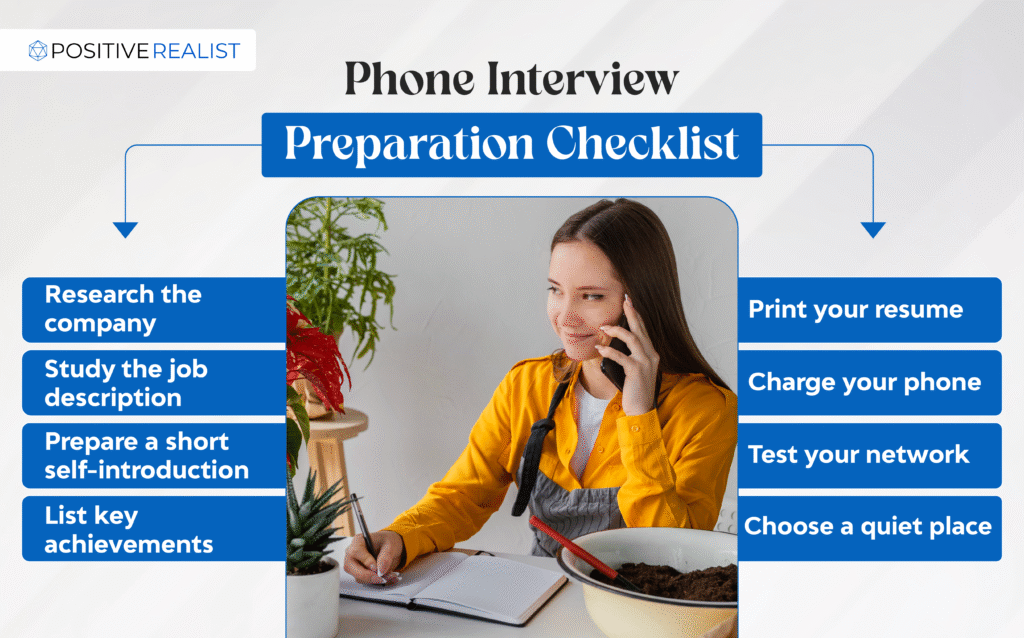
The first step in preparing for a phone interview is to research the company and the role properly. Read the job description carefully so you understand what they need and how the role fits your career goals.
When you understand the company, you also understand its goals, values, and work culture. This helps you shape your answers in a way that matches what they are looking for. It also helps you ask better questions, which shows you are serious and prepared.
For example, if a company is hiring for a marketing role and they recently launched a product, don’t speak only in general terms. Mention a few relevant strategies, tools, or campaign ideas that match that launch.
2- Keep Your Resume and Talking Points Ready
Before your interview, keep your resume in front of you so you can quickly refer to your experience, skills, and achievements. Make sure it’s easy to read, well-formatted, and can pass applicant tracking systems (ATS).
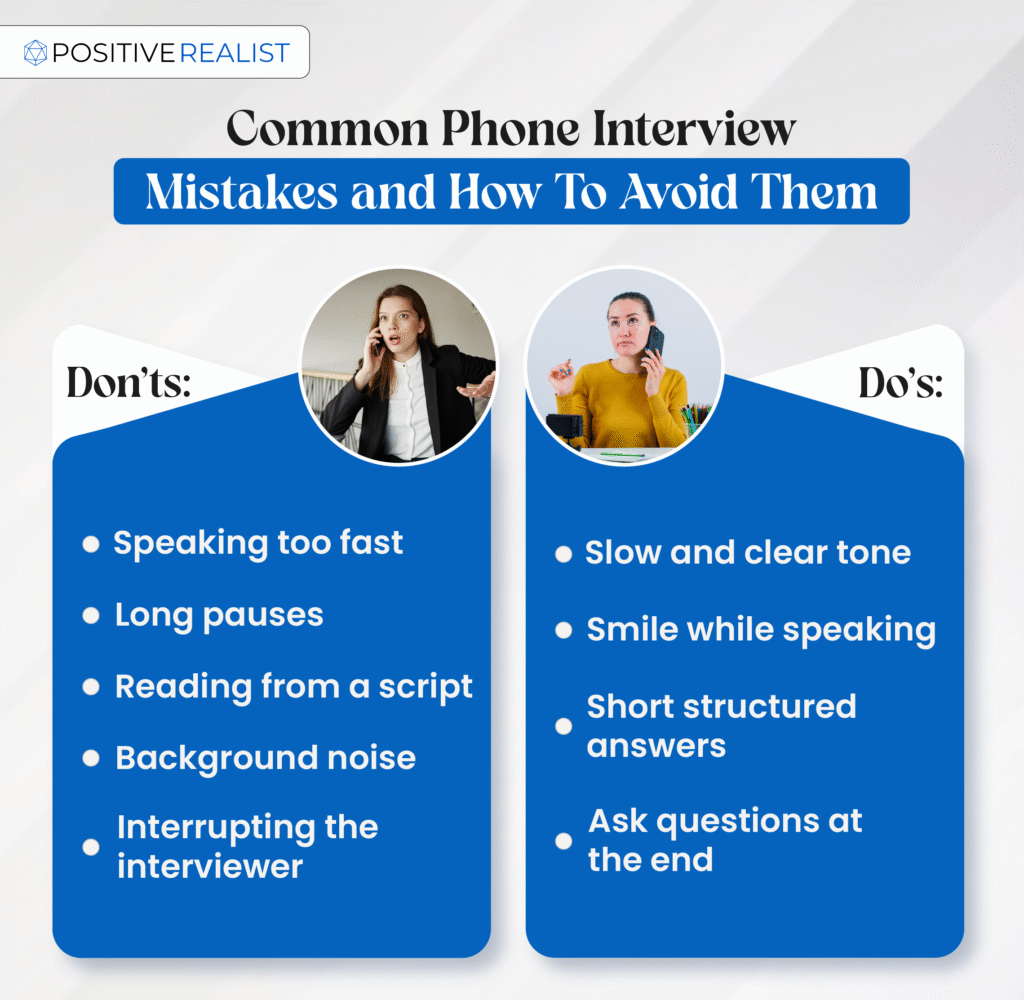
Also, prepare simple talking points so you don’t freeze or take long pauses. Keep your key notes close so you can stay focused while speaking.
Make a phone interview cheat sheet that highlights your key achievements, measurable results, skills, and answers to common phone screening questions.
3- Practice Your Answers
Phone interviews depend heavily on how you sound, and that improves with practice. Before your interview, prepare answers to the most common screening questions, such as:
- “Tell me about yourself” (the most common phone interview question)
- “Why do you want this role?”
- “What are your strengths and weaknesses?”
- “Why do you want to leave your previous job”
- Role-specific technical questions
This helps you speak in a more organized way and reduces pressure during the call.
Remember the three C’s of interviewing: character, confidence, and clarity. Your answers should show all three.
4- Prepare Your Environment
Now comes a key step: set up a comfortable space for your interview.
Choose a quiet spot where you won’t be interrupted. Make sure your phone is charged, and your internet connection is stable (if the call is app-based). Keep your notepad, resume, and talking points ready.
You can sit or stand during the call, pick what helps you speak better, and feel more relaxed.
During the Interview: Every Word Counts
Now comes the interview part, and the following tips can help you ace it effortlessly:
5- Friendly Greeting
Answer the phone on time and start with a friendly greeting, not a confused “Hello?” When the interviewer responds, say your name clearly and thank them for their time.
The first few seconds set the tone. Smile while you speak, it really does make your voice sound warmer and more confident.
6- Answer Questions Confidently
Answer each question with confidence and clear wording. Let the interviewer finish first. Then respond calmly, with short pauses when needed.
Avoid long silence, but also don’t rush. Keep your tone steady and your answers clear and focused.
For behavioral questions, use the STAR technique (Situation, Task, Action, Result). It keeps your answers structured and easy to follow.
7- Ask Thoughtful Questions
After the interviewer is done, ask your questions.
Plan your questions ahead of time. You can ask about responsibilities, goals, team structure, daily workflow, and what success looks like in the role.
Avoid asking about salary and benefits unless the recruiter brings it up first.
8- Watch for Red Flags
During the telephone interview, be conscious of the red flags as if the interviewer:
- Looks unprepared or disorganized
- Asks irrelevant or inappropriate questions
- Is unclear about the job role
- Lacks clarity on the next steps in the recruitment process
During the Interview: Follow-Up Matters
A phone interview usually lasts around 15 to 30 minutes. These tips help you leave a strong final impression:
9- Send Thank You Email
After the interview, send a short thank-you email. It should repeat your interest in the role and mention one key point from your conversation to make it personal and memorable.
10- Prepare for the Next Steps
After the phone interview, start preparing for what comes next. This may be a technical test, an assessment, a video interview or an in-person interview.
If you need to follow up, ask politely for an update and confirm the next steps.
Final Note!
Phone interviews can feel stressful because everything rides on your voice but with the right prep, you can sound like yourself and sound confident.
When you know the role, have your key points nearby, and practice answering out loud, you will stop second-guessing and start speaking clearly and calmly.
If you don’t want to do it alone, we’ve got you. With Positive Realist’s interview preparation coaching, you will get personalized practice, real-time feedback, and a simple plan to help you walk into your next call feeling ready and leave it knowing you did well.
FAQs
How to Tell if I Did Well in a Phone Interview?
A phone interview usually went well if the interviewer discussed next steps, mentioned timelines, introduced another team member, or the call lasted longer than expected.
Can I Use Notes During the Interview?
Yes. You can use notes during a phone interview like talking points, key achievements, and reminders so you stay clear and confident.
What Questions Should I Ask a Recruiter During Phone Screening?
You can ask about what they expect from the role, the company’s goals, the team you will work with, and what the next steps look like in the hiring process.
About the Author
Jerry P.
Jerry P. is a certified Life & Leadership Coach at Positive Realist. He helps professionals and individuals gain clarity, confidence, and actionable strategies for growth
Jerry P. is a certified Life & Leadership Coach at Positive Realist. He helps professionals and individuals gain clarity, confidence, and actionable strategies for growth


